
Pasquotank County Court Record Requests
Begin any Pasquotank County court-record request with the free North Carolina eCourts Portal, and write down the full case number once you find the right Pasquotank case. The Portal's Case Summary or Register of Actions lays out public information and any public documents in that file. When a public image is offered, you can open it there. Downloads happen one at a time, though. For anything the Portal cannot deliver, whether the item is missing, too large, historical, remote-restricted, or needs official certification, turn to the Pasquotank Clerk of Superior Court, who holds the official court records for the county.
- Find the full Pasquotank case number in Portal, on court paperwork, or by calling the clerk for an appropriate search route.
- Name the document, order, judgment, case file, audio recording, or certificate needed from the Pasquotank record.
- Use Portal for an available public image in the Pasquotank case, or contact the Pasquotank clerk for file inspection, copies, certification, or paper-file review.
- State whether an ordinary copy of the Pasquotank record, certificate under seal, exemplification, or another identified service is needed.
- Confirm Pasquotank submission details with the clerk because no county case-record mail order form or standard turnaround was published.
Need the office directly? The Pasquotank clerk answers at (252) 331-4624. The Pasquotank courthouse main line is (252) 331-4600. The clerk also publishes subject-specific email channels: civil.pasquotank@nccourts.org, criminal.pasquotank@nccourts.org, estates.pasquotank@nccourts.org, and financial.pasquotank@nccourts.org. One caution applies. The mailing directions the Pasquotank County court publishes cover traffic payments, not document orders. So a mailed payment or a statewide form will not get you a Pasquotank case file.
Pasquotank Court Records Portal and Clerk
A Portal Case Summary for a Pasquotank case is one thing. The clerk-held file at the Pasquotank courthouse is another. The Portal gives you a chronological view of case information. A filed document is the actual public filing, order, judgment, or other item sitting in the case file itself. A certified copy is different still. That is an official copy or certificate issued by the Pasquotank clerk. The distinction matters. A free public result can locate a record. Yet it does not become the official document another court or official process requires. The Judicial Branch's court-record guidance walks through Portal, clerk terminals, paper files, copies, transcripts, and audio-recording channels. It is worth a close read before you request anything.
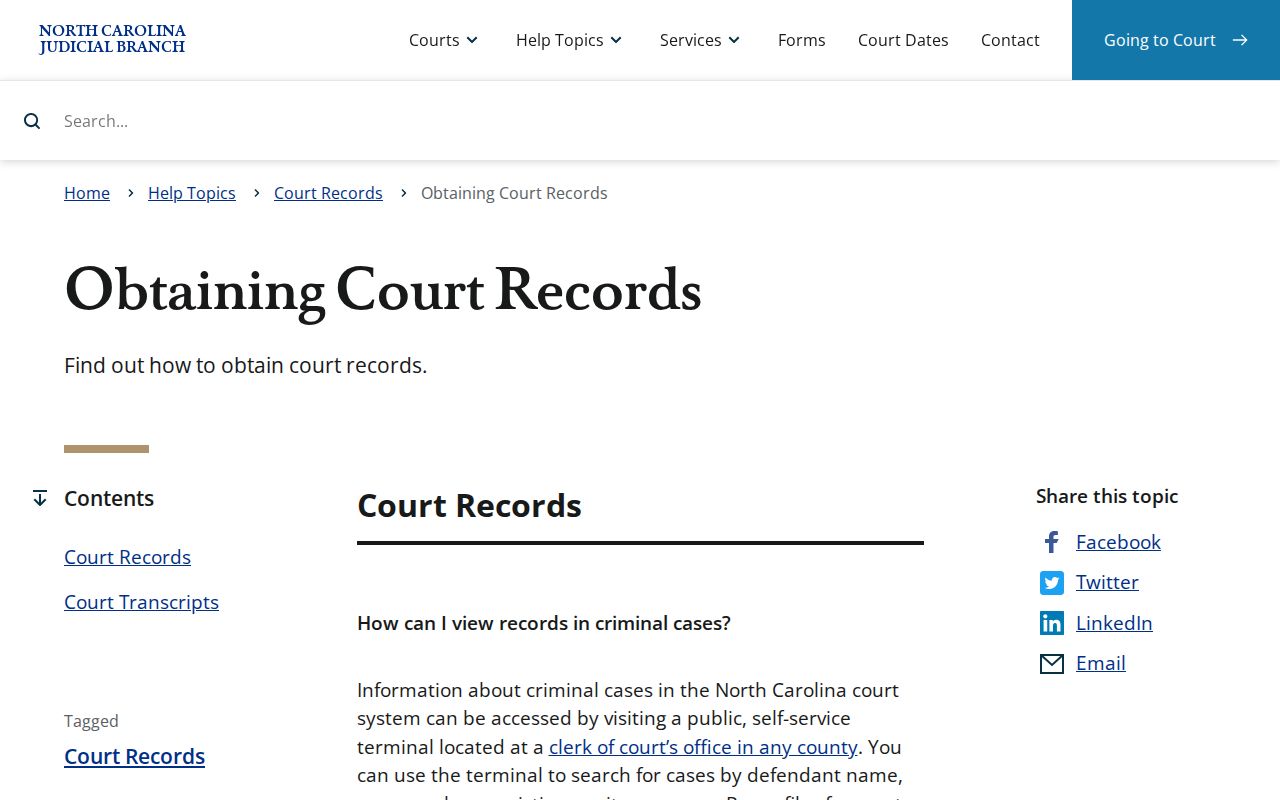
Public self-service terminals sit inside Pasquotank clerk offices. They sit between a remote Portal search and a formal copy request. North Carolina describes the kiosks as able to reach Portal, Guide & File, and File & Serve. They can also print Pasquotank records or scan documents. How many kiosks Pasquotank has, and exactly where they sit, goes unstated in the materials.
Kinds of Court Records
One office handles almost everything here. The Pasquotank Clerk of Superior Court keeps the court-file records for both Superior Court and District Court, and the files span criminal, civil, special-proceeding, estate, and financial matters. On the Portal, these show up under Case Summary and Case Events as the Pasquotank public-access terms. Not every page in a file is viewable from afar, though. Some records sit in the physical file without a remotely viewable document attached. Where you end up going for a Pasquotank court record depends on the case type, what material exists, and any lawful access restrictions that apply.
- Case Summary or Register of Actions: the Portal's chronological view of available Pasquotank case information.
- Filed documents: public Pasquotank filings, orders, judgments, and other case-file items when access is allowed.
- Hearing and disposition information: Portal categories that can help identify the current Pasquotank setting or result.
- Historic paper files: Pasquotank documents existing in the clerk office before the 2024 eCourts conversion.
- Certified records and certificates: Pasquotank clerk-issued services distinct from the free Portal view.
Probate work also runs through the clerk. That means Pasquotank estates and special proceedings stay inside the local clerk/court system rather than splitting off somewhere else. No separate Pasquotank County records portal exists for them. The statewide Portal remains the public entry point, while the clerk's office serves as the place to get files and certifications.
Pasquotank Court Record Copy Routes
To request copies in person, go to the records counter at the Pasquotank County Courthouse, 206 E. Main St., Elizabeth City, NC 27909. The official listing posts weekday hours of 8:30 a.m. to 5:00 p.m. It also lists a mailing address of PO Box 449, Elizabeth City, NC 27907. Bring the full Pasquotank case number with you. Tell the staff what you want: to inspect the file, get a plain copy, or order a certified record. The court source publishes no separate records desk and promises no completion time. So plan for the wait to vary.
Pasquotank County Clerk of Superior Court
206 E. Main St.
Elizabeth City, NC 27909
The Pasquotank contact directory lists the local court-office contacts for exactly these moments. Use it when a Portal image, a historical file, or a case-specific procedure needs local confirmation.
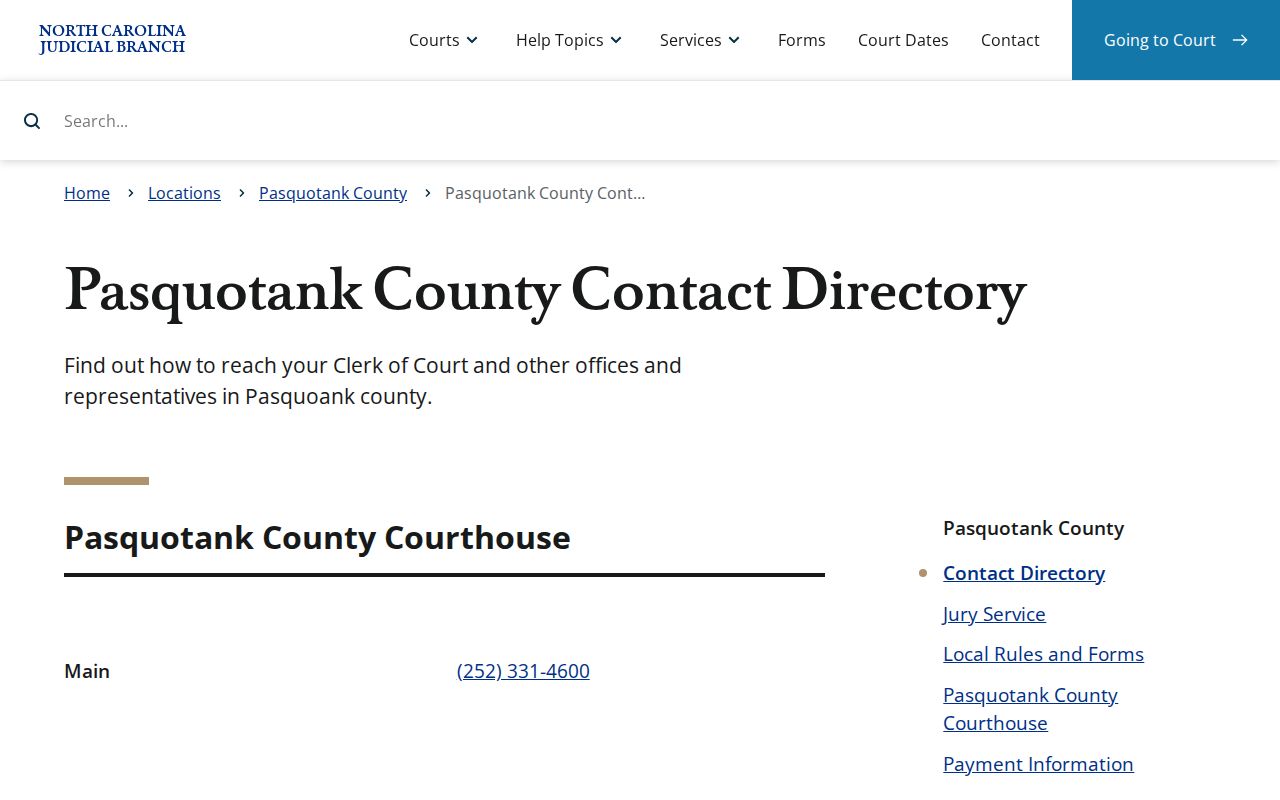
The official Pasquotank directory can point you to the right place. It does not create a new custodian for an individual Pasquotank case file.
Court Records: What They Contain
The Pasquotank Portal documentation describes what the system itself holds, not any one sample file. An available Pasquotank Case Summary may pull together case information, assignment information, parties, case events, dispositions, hearings, and financial information where it applies. Civil, family, probate, and mental-health Pasquotank matters can also show Causes of Action. Public results list all parties except victims. Keep expectations modest. The display does not promise a fixed field order. It also does not promise every document image, or the same categories for every Pasquotank case.
| Case Summary | Date-ordered Pasquotank Case Summary or Register of Actions information. |
|---|---|
| Case Information | Available core Pasquotank information recorded in Portal. |
| Assignment and parties | Pasquotank assignment information and available party details. |
| Case Events | Pasquotank procedural activity such as filing, process, hearing, or order-related events. |
| Hearings and disposition | Available Pasquotank scheduled-event information and the listed case result or status. |
| Financial information | Conditional Pasquotank information that appears only when applicable. |
Transcripts are different. A Pasquotank court reporter or transcriptionist handles them, not the clerk's docket desk, and each reporter sets the rates. When a nonconfidential audio recording exists, you may request it from the clerk, paying the actual CD cost through the statewide AOC-G-114 request route. Confidential matters may require a court permission form.
Pasquotank Record Image Access
Remote access in Pasquotank County has limits. The Portal lets public users view public records and documents. But sealed and confidential data, documents, and cases stay off the internet. Some Pasquotank court records that are public still only reach you through a clerk-office public terminal. So a court docket image that will not open may just need a different lawful access channel.
Downloads also work one document at a time. A large scanned filing can trigger error ER141011. It must be reprocessed by the clerk. When that happens, contact the Pasquotank clerk. Give the case number and a short description of the document. The error does not mean the filing is missing or unrestricted. Paper documents that predate the county's February 2024 eCourts cutover still sit with the clerk. Those stay with the office as well.
Note: The Pasquotank clerk sets no county-specific remote-access program, download turnaround, or public terminal location in any published channel.
Copy Fees and Certification
G.S. 7A-308 sets the statewide clerk charges that apply to Pasquotank copies. The first page of each document costs $2.00. Every additional page or fraction is $0.25. The same statute lists charges for a certificate under seal, exemplification, transcript of judgment, and a certified criminal-record search. One carve-out matters. No fees apply when the service is part of the regular disposition of an action. That is why a free Portal docket search and a prepared copy you order are two different things. The search costs nothing, and the prepared copy does not.
| Clerk service | Verified statutory charge |
|---|---|
| Pasquotank copy preparation | $2.00 first page of each document, then $0.25 per additional page or fraction. |
| Pasquotank certificate under seal | $3.00. |
| Pasquotank exemplification | $10.00. |
| Pasquotank transcript of judgment | $10.00. |
| Pasquotank certified criminal record search | $25.00 for the documented single-county service. |
North Carolina's clerk-fee statute is the official source for those court-clerk amounts.
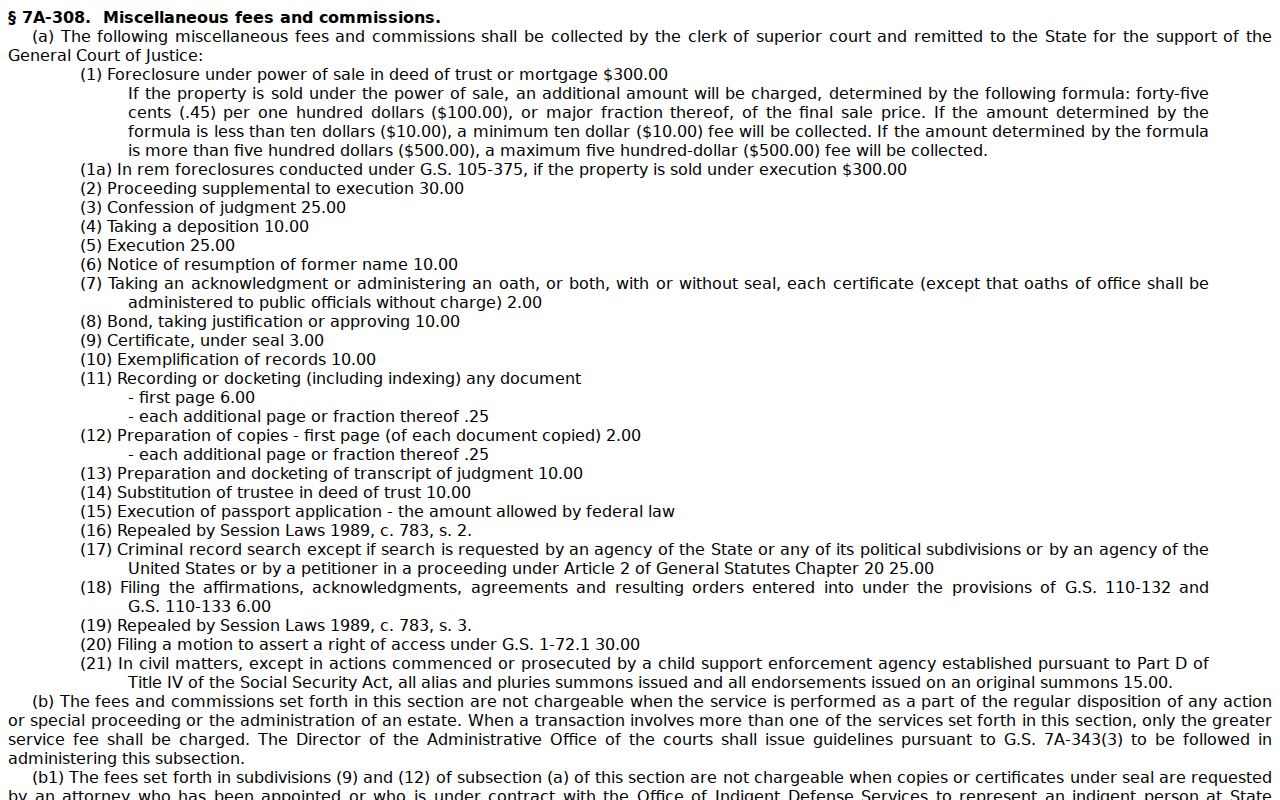
Ask the clerk to confirm the combined copy and certification method before ordering. Pasquotank sets no separate certified-docket fee or handling fee.
Pasquotank Court Record Custodian
For a Pasquotank case file, the Clerk of Superior Court is the office to contact. The statewide NCAOC public-record request form will not get you county court documents. NCAOC states plainly that it is not the custodian of court-file records. It will not fulfill court-document or case-information requests. It will not create or compile a record that does not exist either. Send a specific Pasquotank court docket request straight to the clerk.
The Judicial Branch public-record request form covers NCAOC-held public records and marks its required fields.
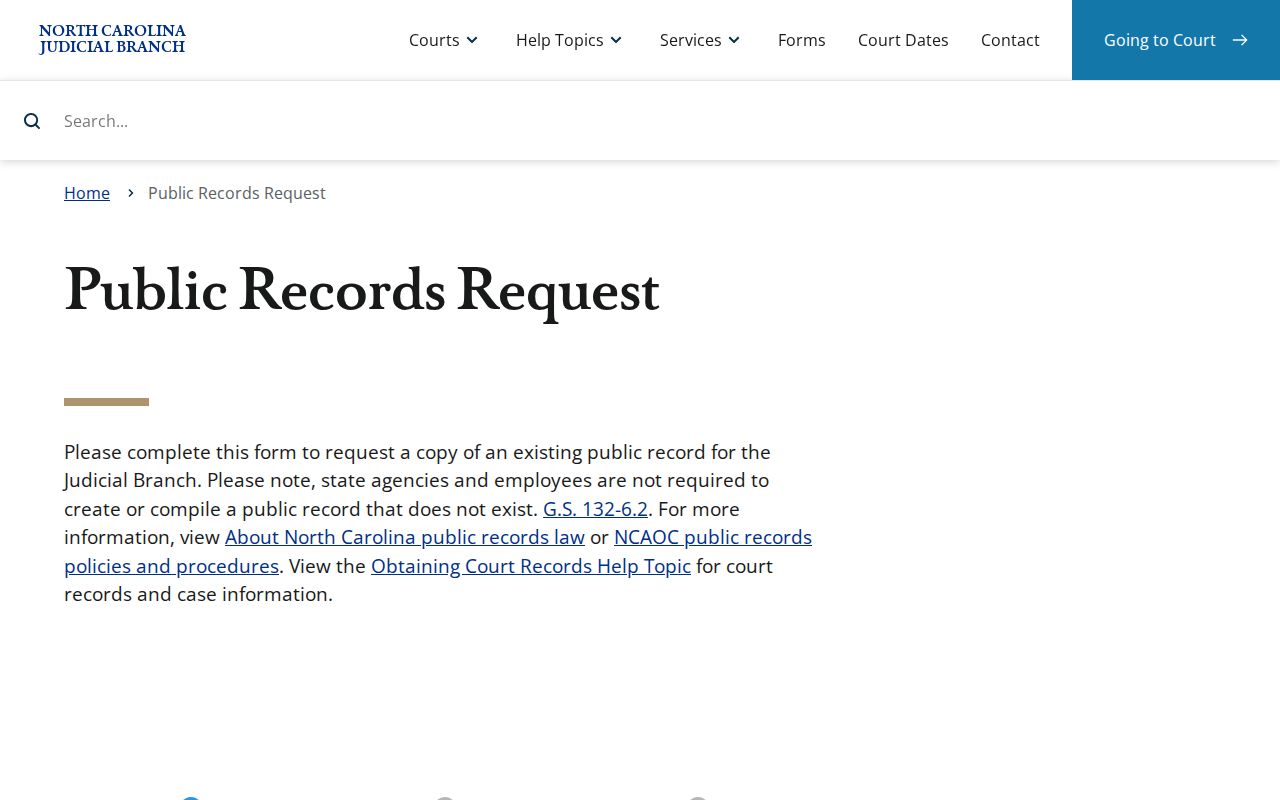
NCAOC follows its own copy rule. Inspection is free, and NCAOC-held public-record copies run $0.25 per page, with possible extra charges for actual cost on extraordinary work. Those amounts never replace the clerk-fee statute for a Pasquotank court case copy.
Access Rules for Court Records
North Carolina law tells clerks to maintain files, dockets, and indexes. It also keeps court records open for public inspection during regular hours unless another law says otherwise. That rule backs public Portal access and in-person inspection. It does not override confidential case categories, though. Juvenile records stay closed to the public. The exceptions are defined authorized access or a court order. And sealed or confidential Portal records never appear online just because someone runs a name search on the docket.
Governing access rules:
G.S. 7A-109 requires clerk-maintained court files, dockets, and indexes and provides for public inspection unless access is prohibited.
G.S. 132-1 states North Carolina's public-record policy, subject to other laws that restrict a record.
G.S. 7B-3000 protects juvenile court records from public inspection except as authorized.
An expunction depends on the governing law and a court order. A missing search result is not proof of one. Check the case number and your filters first. Then take lawful access questions to the clerk instead of reading a no-result screen as the case's status.
Pasquotank Historic Court Records
Pasquotank's switch to Enterprise Justice, Portal, and eFiling went live on February 5, 2024. Legacy data and open cases moved into Portal. Paper documents already in clerk files stayed at the office. One quirk: older event times can display as 12:00 a.m. after conversion. That timestamp is not a real hearing time. So do not treat it as a court setting.
The courthouse at 206 E. Main holds a much longer paper history. State historic documentation says its central building went up in 1882 after an earlier courthouse burned in 1862. A 1938 WPA rear annex and 1979-80 wings were added later. For old material, a clerk inquiry still matters. These facts do not confirm any specific lost-record inventory from the fire.
NCAOC's public-record policies and procedures draw the line between its agency records and clerk-held court files.
Bring Pasquotank court file requests to the county clerk. Save the NCAOC policy channel for the state agency records it truly holds.