
Pasquotank County Criminal Docket Searches
Most people begin at the North Carolina eCourts Portal. Choose Smart Search, type a party name or a full record number, and trim a crowded result with the Pasquotank location plus the Criminal Actions category. The chronological public view is called a Case Summary or Register of Actions. That one Portal serves the whole state. There is no separate Pasquotank criminal database behind it.
Have a few facts ready first. A full name, a complete record number, and the county all help. Portal will not search by charge name. Payment-related lookups need the dash and the correct three-digit county code in the record number. Since a search caps out at 200 results, a filing-date range or another permitted filter can separate a common name from the crowd.
- Open Portal Smart Search and enter a Pasquotank party name or record number.
- Use the Pasquotank location and Criminal Actions filters after supplying the initial search criterion.
- Open the matching Pasquotank Case Summary and review Case Information, Assignment Information, Case Events, Hearings, and any Disposition section.
- Use Search Hearings or the Pasquotank criminal calendar to check a current setting and location.
- Ask the Pasquotank Clerk of Superior Court for a terminal search, file inspection, or a certified record when the public display is not enough.
Pasquotank Criminal Docket Filters in Portal
Smart Search has two dependable defaults: a Pasquotank case or record number, and a party name. From there, Advanced Filters can narrow by location, case category, case status, filing-date range, and party criteria. The official Portal materials note one limit. An Advanced Filter cannot stand on its own. It only refines a query you have already run. For names, a last-name wildcard works after at least three characters. A first-name wildcard works after one.
For the bigger picture of how a criminal case moves through the state courts, North Carolina's criminal-cases explanation lays out the official court flow.
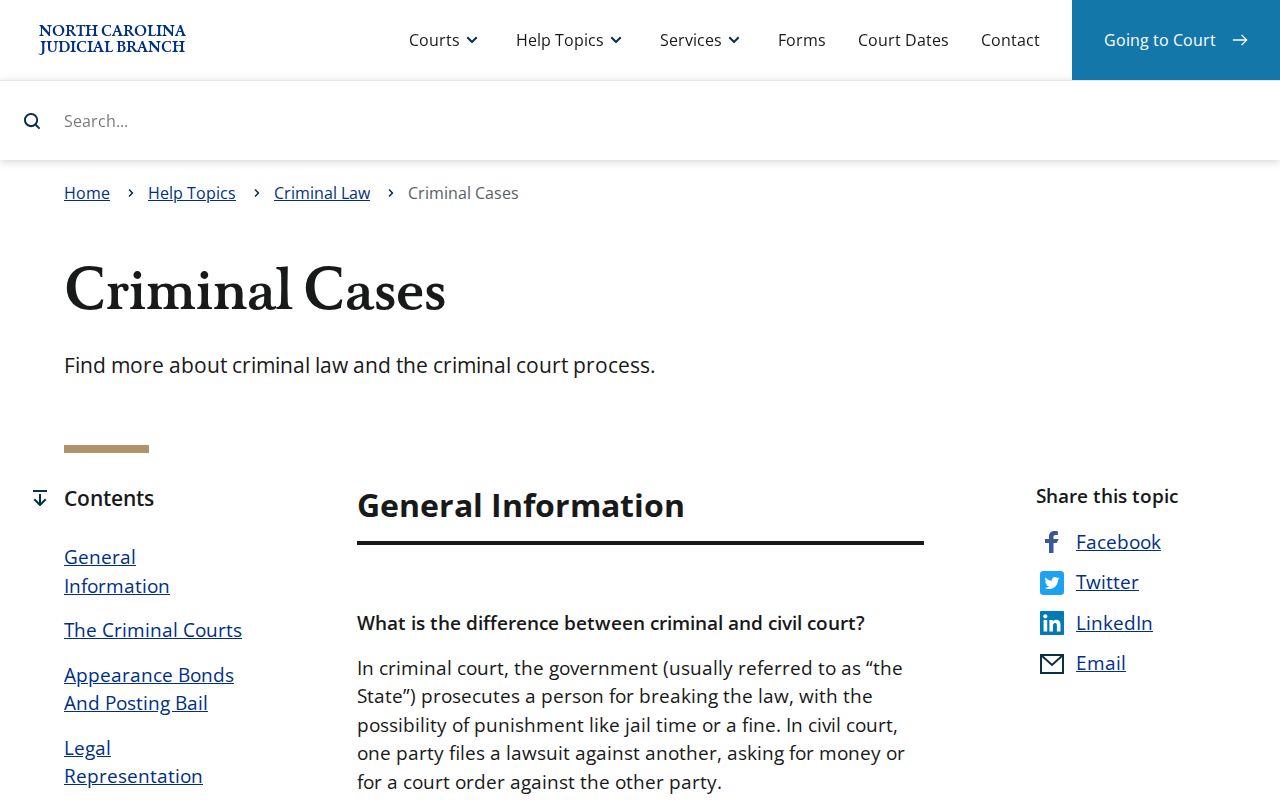
That flow chart helps you spot the Pasquotank trial division handling a matter. For the true assignment and event history of one case, though, the Pasquotank Case Summary is still the place to look.
Portal has quirks worth knowing. It sometimes presents a CAPTCHA challenge. Its public display may mask a date of birth down to just a year. It does not validate by Social Security number. A precise Pasquotank case number helps. So does a tightly narrowed name search. Both beat a broad query every time.
Criminal Dockets: What They Show
In a public Pasquotank criminal case, the Case Summary may include a chronology plus sections for Case Information, Assignment Information, Party Information, Case Events, Hearings, Dispositions, and, where it exists, Financial Information. The exact contents vary by case. Portal documentation offers no local sample. None of it proves a specific charge block, bond amount, attorney label, or disposition-code value. So treat those details as unknown until the record itself shows them. Guessing from a generic example invites error.
| Record number | The Portal identifier. The statewide illustrated pattern is 23IF000022-420; it is an example, not a Pasquotank county-code rule. |
|---|---|
| Case Information | Basic Pasquotank case information shown in the Case Summary when public. |
| Assignment Information | The recorded Pasquotank assignment information, which helps avoid assuming a court from a case label alone. |
| Case Events and Hearings | The Pasquotank procedural timeline and scheduled-event information available for the case. |
| Disposition and finances | Pasquotank result or status information and, only when present, a Financial Information section. |
Pasquotank search results list every party except victims. One caution: an event alone proves nothing final. When you want to know how a Pasquotank case ended, read the Disposition field and its date.
Pasquotank Criminal Docket Case Events
Portal labels the chronological line as Case Events. The public FAQ confirms certain criminal process activity. It offers no Pasquotank-only code key. So read the exact wording in your own Case Summary. If a local scheduling abbreviation confuses you, ask the clerk or courtroom staff. Guessing at an expansion can mislead.
- Case Event
- A recorded procedural occurrence, such as filing, process activity, a hearing, or an order-related action.
- Issued
- A warrant, order for arrest, or criminal summons status that Portal may record when the process is issued.
- Returned served or unserved
- Verified process-status language that can appear after service activity.
- Reset to unserved
- A status Portal may record when the process is returned to an unserved condition.
- Recalled
- A verified process-status term; the full timeline gives necessary context.
Events converted before the February 2024 Odyssey go-live may show a 12:00 a.m. timestamp. That marker is a conversion artifact, not a real hearing time. For an appearance question, rely on the hearing entry, the current calendar, and local confirmation.
Criminal Case Stages on the Docket
A Pasquotank criminal case can run from charging and process, to an initial appearance or release conditions, then a District Court appearance or felony progression, onward to plea or trial, disposition and sentencing, and possibly an appeal. Not every case hits every stage. Some skip steps; some resolve early. Treat this as a general map of the journey, not a promise that any single docket will show each stage in tidy order.
Docket flow: Charging and Process › Initial Appearance or Release Conditions › District Court Appearance or Felony Progression › Plea or Trial › Disposition and Sentencing › Possible Appeal
A District Court appeal can open a second trail. It lands in Pasquotank Superior Court for a trial de novo. That matters for readers tracing a record. An early District Court event is not the final felony trial setting. Check Assignment Information and the latest events before drawing any conclusion.
Pasquotank Criminal Docket Hearing Routes
A Pasquotank County criminal docket follows two schedule routes. The Pasquotank Criminal Calendars page gives you a county-filtered view. It shows what is set for hearing. Portal Search Hearings works differently. It looks up current times and locations by whatever criterion you pick. Calendars are helpful context, but they are not the final word on a court date. When sources conflict, trust the latest hearing entry on the Case Summary. Or ask the courtroom deputy or the clerk.
The official Pasquotank criminal-calendar page shows the schedule the county filters for criminal court.
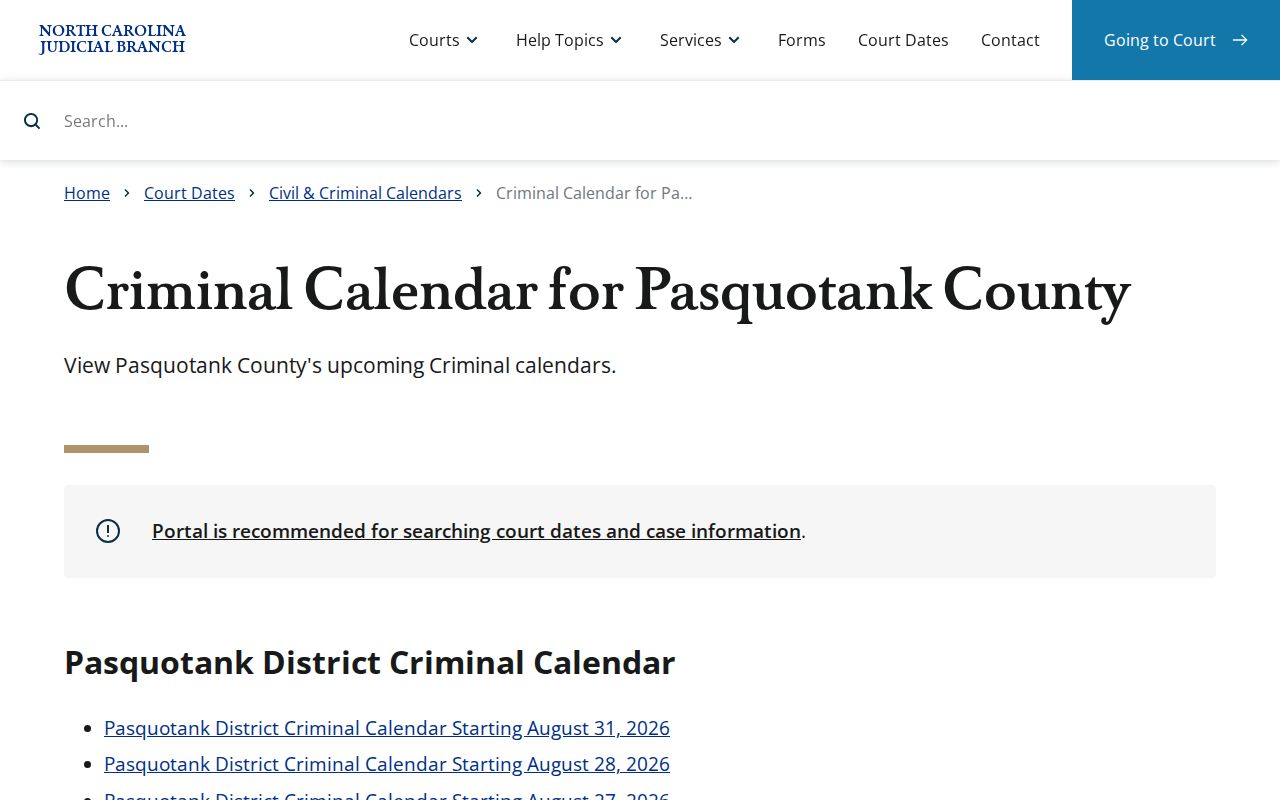
The Pasquotank calendar adds a published schedule view, nothing more. If a setting changes, the case-specific hearing search or clerk confirmation still settles it.
| Official route | Best use | Important limit |
|---|---|---|
| Portal Search Hearings | Current location and time by case number, party, business, attorney, bar number, judicial officer, or courtroom. | The result does not identify virtual versus in-person appearance. |
| Pasquotank Criminal Calendars | County-filtered criminal schedule view. | It is not proof that one case has not been reset. |
Pasquotank County Criminal Docket Courts
Criminal matters in Pasquotank County flow through the state's unified General Court of Justice. The work splits across two trial divisions. Misdemeanors and infractions land in Pasquotank District Court. Felony trials, plus appeals from District Court, belong to Pasquotank Superior Court. Magistrates sit as District Court officers. They handle the early stages: initial criminal process, bond and release decisions, and certain limited dispositions. Across all of it, the Pasquotank Clerk of Superior Court keeps the court files for both trial divisions.
One quirk trips people up. A felony case can show District Court or pretrial activity long before any Superior Court trial. The charge starts lower in the system. To sort out which Pasquotank County criminal docket court has your case, filter the Portal record to Pasquotank. Then read the assignment and hearing fields. For a current setting, check the public calendar or call the clerk.
Pasquotank Criminal Docket Session Labels
Session labels for a Pasquotank criminal docket come from local rules. The Pasquotank local rules and forms page links the First Judicial District material that organizes those sessions. The 2026 schedule carries labels like Pasquotank Criminal, Pasquotank Admin DA, Pasquotank Crim/Civ, and Pasquotank CMCrim, and it states that every Pasquotank session starts at 9:00 a.m.
That same local-rules page publishes the district schedules and labels visitors can check directly.
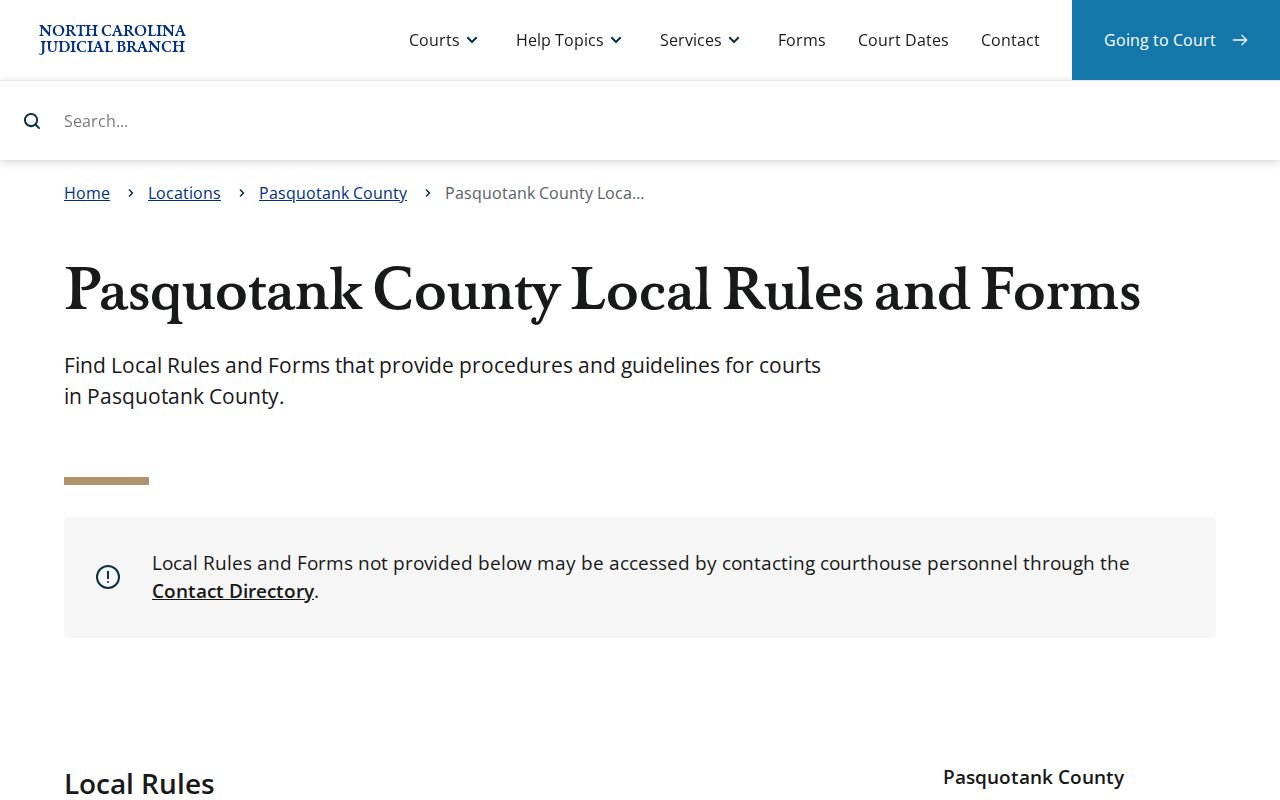
Treat those labels with care. A Pasquotank 9:00 a.m. start time or a schedule name is just an administrative plan. It is never a personal appearance time for your case. The published schedule does not define every shorthand term. So it can't tell you what a label means for you. For a case-specific meaning, ask the Pasquotank clerk or the courtroom handling the matter.
Access Rules for Criminal Dockets
North Carolina keeps clerk-maintained files, dockets, and indexes open for public inspection. A statute must say otherwise to close them. Public Portal access is free and needs no registration. Still, a Portal case timeline is not a certified record. Sealed and confidential cases stay out of Portal entirely, along with their documents and data. A missing result can also stem from a spelling slip, a selected filter, conversion timing, or a requirement that you ask the clerk's office directly.
Key Rules:
G.S. 7A-109 requires clerks to maintain records and provides public inspection unless law prohibits access.
G.S. 7B-3000 makes juvenile court records confidential except for defined authorized access or court order.
G.S. 15A-145.2 directs expunction of court and identified agency records for covered qualifying matters after an applicable order.
Unreturned Pasquotank warrants and similar restricted material follow their own access rules. If a Pasquotank record won't appear, don't leap to sealed or expunged as the explanation. And don't expect Portal to surface confidential material it was never given.
Pasquotank Criminal Docket Clerk Fallback
When Portal can't resolve a Pasquotank criminal record, go to the clerk. The Pasquotank Clerk of Superior Court contact directory lists the office at (252) 331-4624. The unified clerk office handles public terminals, paper files, ordinary copies, and certification questions. No official source publishes how many terminals exist or where they sit. So ask at the counter instead of guessing a room.
Paper Pasquotank documents from before the February 2024 eCourts conversion still live at the courthouse. An eligible Pasquotank traffic payment can go by mail under a published option. But the court publishes no mail-order form for case documents. It offers no fax route and no turnaround promise. The statewide NCAOC public-record request form won't substitute either. NCAOC states it is not the custodian of an individual Pasquotank court file.
Need a certified single-county criminal-record search? G.S. 7A-308 sets a $25 fee for that clerk service. A free Portal Case Summary and a certified clerk search serve different jobs. Ask the clerk for the record when you need certification. The same goes for a historical paper file or an onsite public-access path.